Research Publications
Four Decades of Research
For more than forty years my research has explored the relationships between indigenous peoples, place, spirituality and the natural world. Beginning with studies of indigenous knowledge systems and environmental anthropology, my work has developed through the study of Sacred Natural Sites, enspirited landscapes, Spiritual Governance and, more recently, the implications of these ideas for environmental governance, Juristic Personhood and the Rights of Nature.
Although my work has taken me to many parts of the world, it has been shaped primarily by long-term ethnographic research among the indigenous peoples of Eastern Kham on the Tibetan Plateau. Living and working alongside local communities enabled me to document relationships between people, other-than-human persons and place that are rarely recognised within conventional conservation or environmental governance.
The publications presented below document the evolution of this research. They represent an intellectual journey from indigenous knowledge systems and environmental anthropology, through Sacred Natural Sites and Spiritual Governance, to contemporary debates concerning Juristic Personhood, Rights of Nature and, most recently, Nature Recovery in Wales.

Indigenous Knowledge Systems and Environmental Anthropology (2004–2010)
My early research explored indigenous knowledge systems, environmental anthropology and ethno-forestry among the indigenous peoples of southwest China. This work demonstrated that local communities possess sophisticated ecological knowledge and resource stewardship systems that challenge conventional approaches to conservation and natural resource management.
Studley, J. (2005). Sustainable Knowledge Systems and Resource Stewardship: In Search of Ethno-Forestry Paradigms for the Indigenous Peoples of Eastern Kham. PhD thesis, Department of Geography, Loughborough University, Loughborough, UK.
Summary
Drawing on extensive fieldwork among indigenous communities in Eastern Kham, this thesis develops an ethno-forestry paradigm demonstrating how indigenous knowledge systems underpin sustainable resource stewardship and biodiversity conservation.
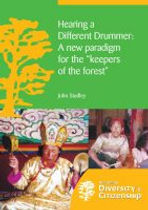
Studley, J. (2007). Hearing a Different Drummer: A New Paradigm for the “Keepers of the Forest”. London: International Institute for Environment and Development (IIED).
Summary
This book argues that effective conservation depends upon recognising indigenous aspirations, values and knowledge systems. It introduces the concept of the endogenous realisation of aspirations (ERA) as an alternative approach to development and environmental management.
Studley, J., et al. (2005). Eliciting Forest Values and “Cultural Loss” for Community Plantations and Nature Conservation. Forests, Trees and Livelihoods, 16(4), 329–358.
Summary
Presents methods for identifying indigenous forest values and assessing the cultural impacts of environmental change, demonstrating the importance of local knowledge in community forestry.
Studley, J. (2004). “The Challenge of Ethno-Forestry: The Predicament of Traditional Local Forest Practices around Lugu Lake in China.” Trees: Journal of the International Tree Foundation, 64, 16–17.
Summary
A short but influential paper highlighting the challenges facing traditional forest management systems in southwest China and arguing for greater recognition of indigenous forestry practices.


Sacred Natural Sites and Enspirited Landscapes (2010–2017)
The second phase of my research focused on Sacred Natural Sites, territorial cults and enspirited landscapes on the Tibetan Plateau. Through long-term ethnographic fieldwork I documented the role of gzhi bdag (spirit owners) and other-than-human persons in sustaining biodiversity, cultural identity and indigenous systems of environmental stewardship.
Studley, J. (2010). Uncovering the Intangible Values of Earth Care: Using Cognition to Reveal the Eco-Spiritual Domains and Sacred Values of the Peoples of Eastern Kham. In B. Verschuuren, R. Wild, J. A. McNeely & G. Oviedo (Eds.), Sacred Natural Sites: Conserving Nature and Culture (pp. 107–118). London: Earthscan.
Summary
Introduces methods for identifying the intangible and eco-spiritual values that underpin Sacred Natural Sites in Eastern Kham, providing a bridge from indigenous knowledge systems to sacred landscape conservation.
Studley, J. (2012). Territorial Cults as a Paradigm of Place in Tibet. In I. Convery, G. Corsane & P. Davis (Eds.), Making Sense of Place: Multidisciplinary Perspectives (pp. 219–234). Woodbridge: Boydell Press.
Summary
Examines Tibetan territorial cults as culturally embedded systems that shape place identity, environmental stewardship and relationships between communities and landscape.
Studley, J. (2014). Gzhi Bdag: Custodians of the Tibetan Spiritscape: A Bio-Cultural Audit of Sacred Natural Sites in Northwest Yunnan, with Special Reference to the Yubeng Valley. Hong Kong: China Exploration and Research Society.
Summary
A comprehensive bio-cultural audit documenting the role of gzhi bdag (territorial spirit owners) in the protection and governance of Sacred Natural Sites.
Studley, J. (2016). Is Yungdrung Bon Compatible with the Tibetan Gzhi Bdag Cult? Unpublished discussion paper.
Summary
Explores the relationship between the indigenous gzhi bdag tradition and the Bon religious tradition, examining continuity and difference in Tibetan religious ecology.


Spiritual Governance and Juristic Personhood (2017–2021)
This phase culminated in the publication of my Routledge book Indigenous Sacred Natural Sites and Spiritual Governance. My research argued that many Indigenous Sacred Natural Sites are governed through sophisticated systems of Spiritual Governance and explored whether Western legal concepts such as Juristic Personhood could provide new mechanisms for recognising and protecting these places.
Studley, J. (2017). Declaring Sacred Natural Sites as Juristic Persons, Sacred Natural Sites Initiative.
Summary
This paper presents the first public articulation of the argument that Sacred Natural Sites (SNS) should be recognised as juristic persons. It contends that existing conservation approaches are inadequate because they continue to treat nature as an object of protection rather than as a rights-bearing entity. Drawing upon indigenous governance systems, particularly those founded on Spiritual Governance, the paper argues that recognising Sacred Natural Sites as legal persons would provide a more appropriate legal framework for safeguarding both their ecological integrity and their cultural and spiritual significance. The paper established the conceptual foundation for the subsequent PARKS journal article (2018) and the Routledge monograph Indigenous Sacred Natural Sites and Spiritual Governance: The Legal Case for Juristic Personhood (2019).
Studley, J. (2018). Indigenous Sacred Natural Sites and Spiritual Governance: The Legal Case for Juristic Personhood. Abingdon: Routledge.
Drawing on long-term ethnographic research among indigenous communities in Eastern Kham, this book develops the concept of Spiritual Governance and explores the legal recognition of Sacred Natural Sites through Juristic Personhood.
I have always thought that sacred sites make an important contribution to species conservation in many places around the world. Here is the carefully prepared evidence that duly describes and respects the beliefs of indigenous peoples.
Reviews
The conservation of biological species and of indigenous cultures belong hand-in-hand. Nowhere is this more apparent that in the many sacred sites described here. They urgently need adequate legal standing so clearly outlined.
This is a compelling plea for greater realisation of the important contribution of Sacred Natural Sites to conservation and for better legal protection and understanding of their spiritual nature”
Professor Sir Ghillean Prance FRS, VMH author of That Glorious Forest: Exploring the Plants and Their Indigenous Uses in Amazonia and The Earth Under Threat: A Christian Perspective
_____
“John Studley offers new perspectives on the importance that spirituality has for the conservation of cultural and natural heritage. Recognising spirits of place (other than human persons) as legal entities, legitimises their role in Indigenous cultures who’s worldviews continue to make significant contributions to the conservation of world’s biological and cultural diversity”
Bas Verschuuren, Wageningen University, The Netherlands
_____
“John Studley opens up a novel, and possibly revolutionary, way for Western conservationists to help indigenous people worldwide protect nature. He suggests that many natural systems are inhabited by locally important spirits, and notes that those spirits have, in certain intriguing cases, been granted the attributes of juristic personhood. This concept which accords legal rights to nature spirits suggests that conservationists have a new and potentially powerful tactic to use in the fight against the people and institutions that destroy nature. It’s such a powerful concept that I’ve used it in various fictional scenarios. John proposes out-of-the-box thinking that hopefully will catch on as another way we can use whatever tactics are available to protect the realms where nature and people are under threat”
Paul Spencer Sochaczewski, Author of An Inordinate Fondness for Beetles (1996), co-author of Soul of the Tiger (1988), former head of global awareness campaigns for WWF International
_____
“John Studley’s timely book explores how indigenous cultures (particularly Tibetan) protect their mountains, lands and waters by interacting with spiritual guardians and using spiritual governance systems to live in harmony with their Sacred Natural Sites. He outlines how legal systems in South America, New Zealand, India, and the USA are belatedly recognising the value of ancient cultural relationships that indigenous people have with their homelands, and explores recent recognition of legal personhood status being granted to rivers, mountains, Mother nature and the natural world. He calls for international conservation organisations to affirm indigenous traditions by entering into dialogue with indigenous people to implement plural approaches to nature conservation management, and celebrate the diversity that is inherent in our rich cultural landscapes around the planet”.
Peter Horsley, Environmental lawyer and consultant to the Maori
_____
“John Studley’s book boldly takes seriously the ‘animist’ case for legal protection of sacred sites. And after all, if corporations be legal persons, then why not local spirits or deities? The burgeoning movement for the ‘rights of nature’ will want to take this work seriously: both for the potential support it offers and for the subtly but crucially different emphasis that it places, on enspirited sacred natural sites.”
Rupert Read, University of East Anglia, UK
_____
“Many indigenous peoples, for generations, have attributed properties of living beings to non-living objects. Today’s environmental policy has not only started to recognise these animistic beliefs, but also started to apply those to contemporary environmental concerns through concepts such as ‘rights of nature’ or ‘legal personhood’. This ‘animistic turn’ in environmental policy has livened up the discussion on the nature-society relationship. John Studley makes a compelling case for recognising the rights of nature and attributing juristic personhood to places of spiritual significance. His case will prompt the organisations in charge of nature conservation today to seriously consider the spiritual importance of places when setting out principles for protected area management”.
Shonil Bhagwat , The Open University, UK
_____
“John Studley engages the long and unjustly neglected phenomena of the cultural, religious, ecological, and conservation meaning and significance of indigenous natural sacred sites as enspirited landscapes. In particular, he marshals the case for recognizing and promoting their legal status as embracing nonhuman persons in the form of nature spirits. This extraordinarily innovative and insightful approach transcends the artificial and counterproductive limitations of the customary anthropocentric approach to environmental conservation in exclusive terms of their extrinsic or utilitarian values. Studley advances new ways of knowing, being embedded in, and protecting nature through the traditions, understanding, and wisdom of local indigenous communities.”
Leslie E. Sponsel, University of Hawai`i
_____
“John Studley has bestrode the world of sacred places for years and is one reason why we all now take such places seriously as both spiritual and conservation priorities. In his latest book he takes us into the next logical step for protecting such liminal places. Giving them rights which have always been there in traditional cultures and which our ‘rational’ world disregarded at huge social, emotional and ecological cost. This is the next struggle and John is once again our leader.”
Martin Palmer, Secretary General of the Alliance of Religions and Conservation (ARC)
_____
“John Studley’s detailed treatment of sacred natural sites is an important contribution to law in general, and a particularly important one for contemporary international indigenous law. The fact is that various groups of people lay claim to heightened respect for sites and areas they consider to be of an importance that is or approaches “the sacred” and there is currently a soft law appreciation of indigenous sacred sites, places and practices that is hardening into positive law. This piece collects the various arguments well in support of indigenous perspectives.”
James W Zion, Lawyer, representing the Navajo Nations
_____
“John Studley has produced a work of sweeping scope that covers not only recent mile stones in the rapidly growing legal basis for nature rights and protection of indigenous sacred sites, but also the anthropology of beliefs and practices underpinning “spiritual governance” of these sites. Covering examples from numerous indigenous groups and multiple countries on several continents, the book also draws deeply on Studley’s intimate knowledge of the Tibetan and Qiangic people of southwest China and Kham. It will be a valuable introduction to this fascinating and rapidly changing area of legal development of native rights, as well as an invaluable reference for scholars, conservationists and activists interested in indigenous and community conserved areas and effective means of nature conservation other than state-managed protected areas”.
William V. Bleisch, Research/Programs Director of China Exploration and Research Society
_____
“John Studley’s new book challenges us to acknowledge and respect forms of environmental governance rarely considered in the nature conservation sphere – yet critically important to millions of people around the world. His comprehensive enquiry into other-than-human-persons and their relationship to people and place, particularly from his experience in Tibet, is both fascinating and exigent, demanding the reader to bow down to the fact that we humans are not the centre of the universe. Hopefully the conservation community will take this book in all seriousness, recognise the important role of spiritual governance, and act accordingly”.
Liza Zogib, Director, Divers Earth
_____
“A work of great erudition and sensitivity. By drawing attention to the past and present governance of natural areas as part of complex spiritual systems, Studley illuminates an important pathway to conservation’s future.”
Harry Jonas, Future Law
Studley, J. F., & Bleisch, W. V. (2018). Juristic personhood for sacred natural sites: A potential means for protecting nature. PARKS, 24(1), 81–96. https://doi.org/10.2305/IUCN.CH.2018.PARKS-24-1JS.en
Summary
This paper develops the legal case for recognising Sacred Natural Sites as juristic persons. It argues that granting legal personality offers a practical mechanism for protecting nature by recognising the rights and governance systems of indigenous communities, while integrating customary law with contemporary environmental governance.
Studley, J., & Horsley, P. (2019). Spiritual Governance as an Indigenous Behavioural Practice: Implications for Protected and Conserved Areas. In B. Verschuuren & S. Brown (Eds.), Cultural and Spiritual Significance of Nature in Protected Areas: Governance, Management and Policy (pp. 72–84). Abingdon: Routledge.
Summary
This chapter introduces Spiritual Governance as an indigenous behavioural practice that shapes human relationships with nature. It demonstrates how spiritual beliefs, ritual obligations and reciprocal relationships with the more-than-human world contribute to biodiversity conservation and offers a new framework for protected and conserved area governance.
Studley, J. (2018). The Ritual Protection of Enspirited Sacred Natural Sites on the Tibetan Plateau and the Optimisation of Lay Participation. Journal for the Study of Religion, Nature and Culture, 12(4), 354–383. https://doi.org/10.1558/jsrnc.35614
Summary
Drawing on extensive ethnographic fieldwork in Eastern Kham, this paper demonstrates that the conservation of Sacred Natural Sites is sustained primarily through the ritual practices of indigenous lay communities rather than by monastic institutions alone. It argues that ritual participation constitutes a sophisticated system of Spiritual Governance, regulating human behaviour through reciprocal relationships with territorial deities (gzhi bdag) and other more-than-human beings. The paper challenges prevailing conservation narratives and demonstrates that indigenous ritual practice represents an effective and enduring mechanism for biodiversity conservation.


Recent Research and Emerging Directions (2021–Present
My current research builds upon these earlier themes while extending them into contemporary debates concerning Rights of Nature, relational ontologies and Nature Recovery in Wales. Increasingly, my work seeks to translate insights gained through environmental anthropology into practical approaches to biodiversity conservation, community stewardship and environmental governance.
Studley, J. (writing as Dan Meir). (2024). Enspirited Landscapes. Langscape, 13, 112–116.
Summary
An exploration of enspirited landscapes and their significance for biocultural conservation and the relationship between people, place and the more-than-human world.
Studley, J. (on behalf of Dan Meir). (2021). The gzhi bdag cult as a regenerative worldview and an animistic expression of biocultural resistance in the Hengduan Mountain Region. Tibet Journal, XLVI(1), 25–74.
Summary
Examines the gzhi bdag tradition as an indigenous worldview that contributes to cultural resilience, environmental stewardship and regenerative relationships with place.
Studley, J. (2021). Tibetan Spiritscapes and Spiritual Governance in Southwest China (Case Study 5). In E. Bernbaum, J.-M. Mallarach & B. Verschuuren (Eds.), Cultural and Spiritual Significance of Nature: Guidance for Protected and Conserved Area Governance and Management (pp. 74–75). IUCN.
Summary
A case study illustrating how Spiritual Governance contributes to the conservation and management of culturally significant landscapes.


